


At Awtana, we are passionate about AI. But there are days when you do not just move forward: you redraw the map. Today was one of those days. As we read the announcements from INBOUND 2025, it clicked: Loop Marketing is not just another tactic; it is a milestone in how we will work with AI moving forward.
HubSpot did not just give a name to multi-channel chaos; it gave us a clear playbook to turn it into continuous growth. It blew our minds because it aligns perfectly with our approach to marketing: short cycles, continuous learning, and human-AI teams operating as one. Instead of pushing messages and waiting, the Loop proposes to express, tailor, amplify, and evolve in a continuous cycle—a system that improves with every iteration and relies on data, not gut feelings. It is simple, practical, and, above all, actionable.
What Is Loop Marketing?
It is a 4-stage strategy that operates in short cycles: you define your message, adapt it for each audience and channel, amplify it, and then optimize based on key learnings to start again, better every time. This is where AI meets human judgment to drive sustained growth. In each cycle, you express your message, tailor it by audience/channel, and distribute it across the channels where your ideal customer spends time. You learn from the data to restart the next cycle even better. HubSpot formalized this into four steps: Express, Tailor, Amplify, Evolve.
This emerged as processes evolved and marketing became increasingly fragmented: lower website traffic, lower open rates, more channels, and tactics that no longer deliver results. Loop Marketing organizes that chaos into a connected system that learns with every iteration.
How it differs from Inbound: Inbound marketing focuses on attracting with content, converting, closing, and delighting—heavily centered around SEO, blogs, and forms. Meanwhile, Loop Marketing acknowledges that the buyer no longer lives on your website: they are on social media, podcasts, newsletters, and AI responses. Content is expressed, tailored for micro-segments and channels, amplified with the help of AI agents, and evolves through continuous learning. It is the reimagining of inbound for the AI era.
The 4 Stages of the Loop and How to Execute Them in HubSpot
|
✅ Express: (Define) Define your preferences, your tone, and your perspective based on your ideal customer profile. In other words, in this stage you define and express who you are, define the ideal customer, and create your brand manual and style guide. |
|

AI can produce content quickly, but for it to be effective, it needs a defined voice, context, and perspective. This is achieved by creating a clear style guide that reflects the company's mission, tone, and differentiation. It is essential to identify the target audience, understand their concerns and needs, and leverage AI to analyze customer feedback and reviews. With that foundation, you generate creative concepts that position your brand in the market.
HubSpot Tools
- Breeze Assistant: Use CRM data to define your ideal customer profile and generate campaign concepts
- Brand Identity: Create an AI-powered style guide that captures your distinctive point of view across all assets.
- Marketing Studio: Turn your campaign briefs into a multi-channel, multi-format content suite.
|
✅Tailor: (Adapt) Use AI to make your interactions personal, contextual, and relevant. Tailor your message for each customer—the message should feel personal, using segments of one and 1:1 relevance. |
 |
AI can create content in seconds, but for it to have an impact, it needs a clear identity. To achieve this, first define your brand's voice and style. Next, build an ideal customer profile, understanding their concerns, goals, and needs, leveraging AI to analyze feedback and reviews. Then, develop a style guide that reflects your mission, tone, and competitive differentiation. With this foundation, generate creative campaign concepts that position your company and highlight its unique value.
HubSpot Tools
- AI-Powered Segments: Identify high-intent audiences and segments based on behavioral and engagement patterns
- Personalization Agent: Create specific content variations and personalized experiences for each segment
- AI Emails: Create personalized emails for each contact using CRM data
|
✅Amplify: (Amplify) Diversify your content across different channels for humans and bots. Distribute across all channels: search AI, AI reviews, podcasts, social media, LinkedIn, communities, AEO, LLMs |
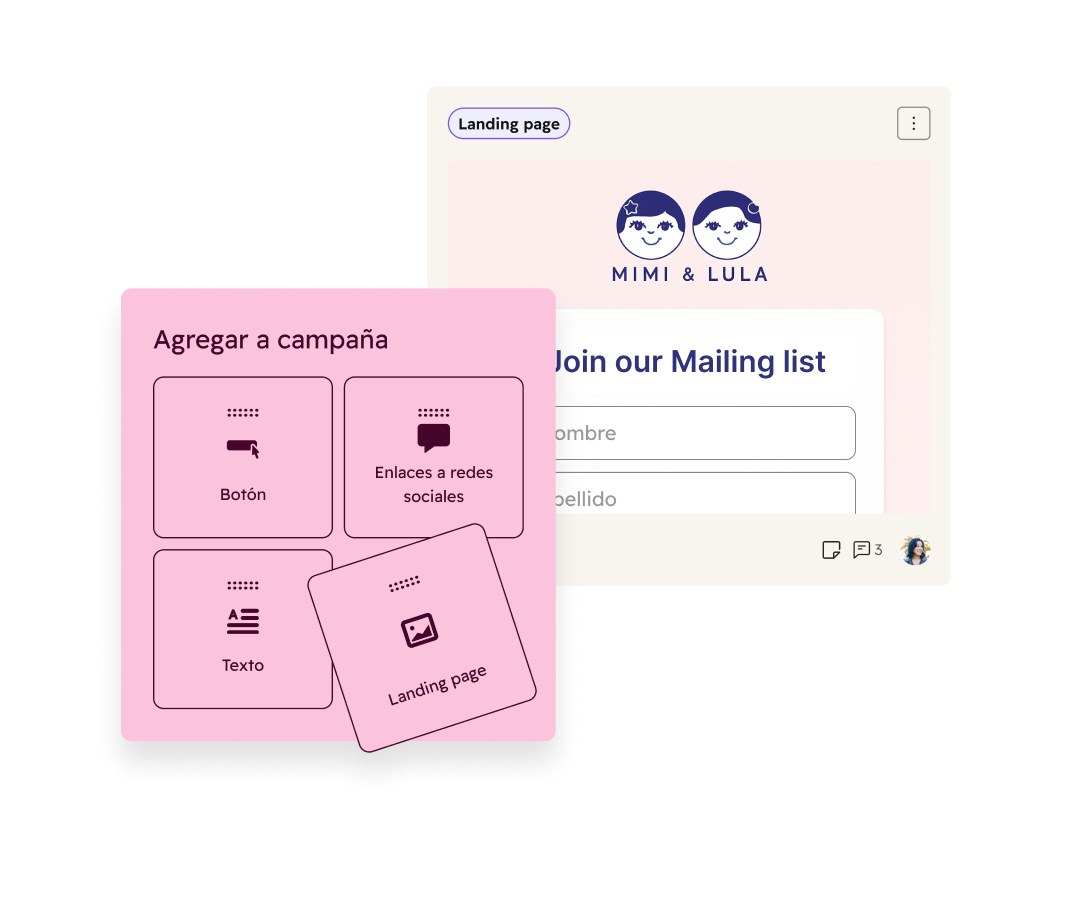 |
The amplification stage focuses on ensuring your content is present and discoverable across all channels where your customers search and place trust: from ChatGPT and YouTube to forums, online communities, and content creators. Simply publishing is no longer enough; it is about being part of the right conversation and in the spaces where your buyers make decisions.
To achieve this, it is crucial to design a clear content strategy, diversify channels, and optimize them according to their format: articles for large language models, product demos for TikTok, carousels for LinkedIn, and more. Each asset can be repurposed into different formats and stages, maximizing reach and impact. In addition, combining targeted ads with trusted creator collaborations enhances brand visibility and credibility.
Finally, AI plays a central role by automating content production and distribution, accelerating scale without sacrificing consistency. To complete the cycle, each channel must be optimized for conversion, featuring clear, contextual calls to action that guide the customer seamlessly toward the next step.
HubSpot Tools
- Marketing Studio: Plan and create campaign assets and distribute them across all channels
- Customer Agent: Provide your visitors with 24/7 AI-powered support that engages with them, qualifies leads, and answers all their questions.
- AEO Grader: Analyze and improve your brand's AEO (Answer Engine Optimization). While SEO aims to get your website ranked at the top of Google, AEO aims to make your content the direct "answer" displayed by answer engines such as: Google featured snippets, voice assistants (Siri, Alexa, Google Assistant), and AI search engines (such as ChatGPT, Perplexity, or Gemini).
| ✅Evolve: (Optimize) Iterate quickly and effectively. AI helps you make changes in days, not quarters. Act fast and adjust even faster; measure and optimize in real time. |  |
Marketing optimization can no longer wait for long review cycles; it requires immediate learning and action. Powered by AI, every campaign becomes a feedback loop that analyzes real-time results, delivers recommendations, and continuously improves—creating a constantly expanding competitive advantage.
Before launching any initiative, AI enables you to predict outcomes by identifying which customers or campaigns are most likely to convert and pinpointing potential weaknesses. Once live, real-time monitoring of engagement and conversions allows for rapid response, while AI flags anomalies and facilitates immediate strategic adjustments.
Furthermore, optimization relies on constant experimentation, such as A/B testing messaging, audiences, or offers. Every insight gained must be applied directly to strategy, segmentation, and budget allocation, making each new campaign more precise, efficient, and difficult for competitors to replicate.
HubSpot Tools
- Marketing Analytics: Generate integrated reports and dashboards across all channels to empower data-driven decisions
- ChatGPT Deep Research Connector: Uncover patterns, valuable insights, and research opportunities using contextual HubSpot data in ChatGPT.
- Email Marketing Tool: Automatically identify engagement shifts to run A/B tests and optimize campaigns
Conclusion
Loop Marketing is not just another tactic; it is the operating system for growth in a dynamic, multi-channel environment. It brings order to chaos through a simple cycle—Express, Tailor, Amplify, Evolve—where human teams and AI capabilities work as one, learning with every turn and turning data into decisions.
The key is not producing more, but producing better and learning faster. Start small: one core message, one segment, three channels, and a 14-day cycle. Measure what matters (pipeline contribution, iteration velocity, learnings per cycle), document what works, and run the loop again with concrete improvements.
This way, each campaign stops being an isolated event and becomes part of a continuous growth engine. The result? Less friction, greater relevance, and marketing that adapts in real time. Moving from disorder to a competitive edge, one cycle at a time.


