

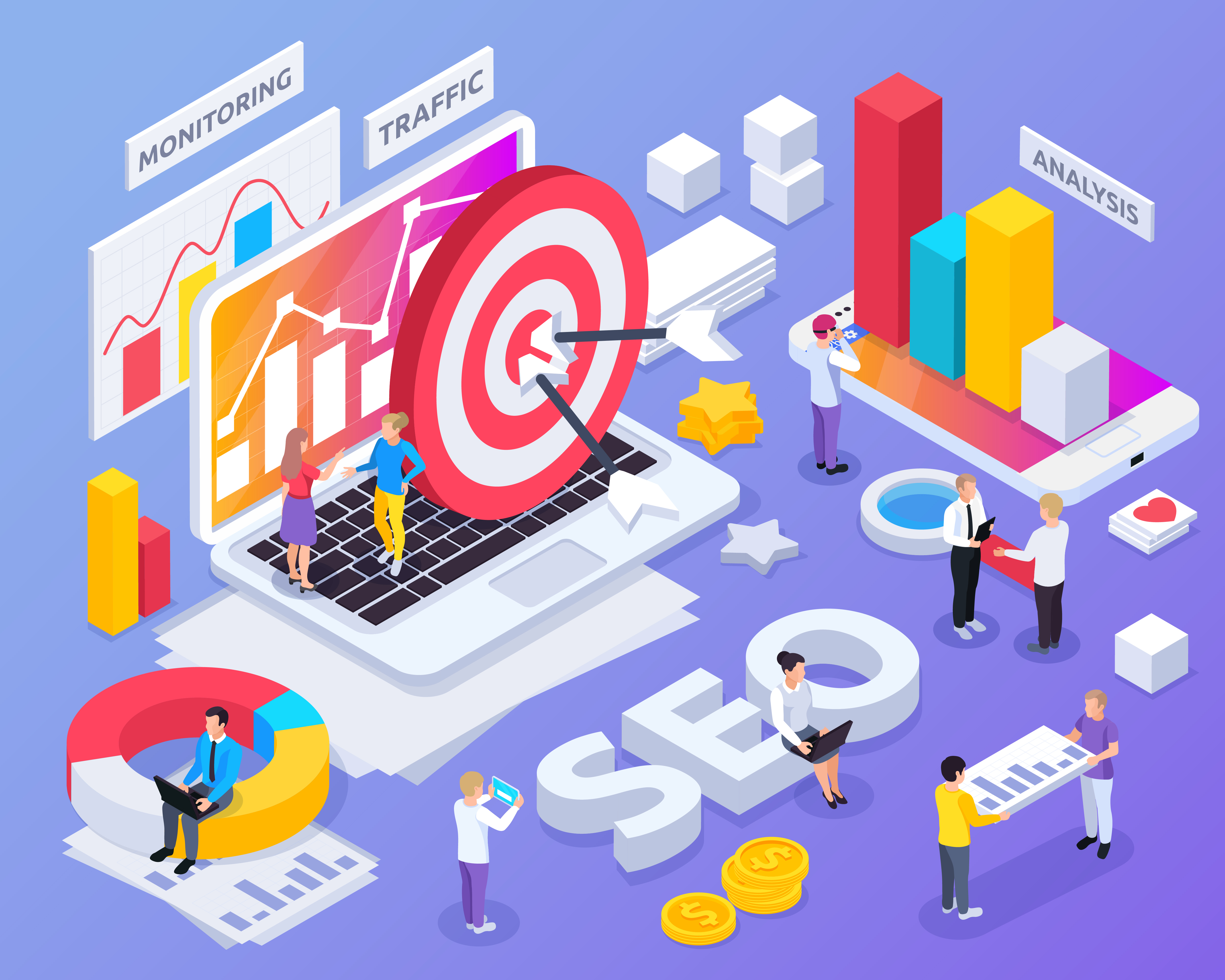
The acronym SEO stands for Search Engine Optimization, a process encompassing various strategies to help your website rank at the top of search engine results.
When you type something into a search engine like Google, the search engine must decide which website is the most relevant and evaluate hundreds of indicators known as "ranking factors" to display a website in the top positions.
A proper SEO optimization process for your website must take these ranking factors into account so that when someone searches for something related to your business, your website appears on the first page.
You might wonder why being on the first page matters. Consider this question: when searching for something online, how often do you go past the second page of results? In reality, most people do not even scroll past the top 5 results. Therefore, if you are not willing to invest in CPC to appear in paid search results, the only way to reach that first page is to develop an SEO strategy for your website.
According to HubSpot, "92% of users will choose businesses on the first page of search results."
How Does an SEO Strategy Work?
SEO consists of optimizing a website to make it more appealing to search engines. These changes involve various factors such as image optimization, incorporating keywords into text descriptions and product or service content across the website, heading hierarchy (H1, H2, H3, etc.), responsive web design that adapts to different devices, page load speed, hreflang tags, and meta descriptions, among other factors that help content align with what users are searching for online.
There are many ways to implement these SEO techniques on a website, but doing so incorrectly can have adverse effects, including negative ranking signals that make it difficult for prospective customers to find your website via search engines like Google, which may distrust your site's content and quality. Most companies fail to create content that resonates with their audience around specific topics, leading users to suspect spam activity on certain pages due to a lack of clarity and context.
You cannot expect your website to magically appear in top Google search results. Securing higher rankings starts with optimizing content around specific keywords and phrases directly tied to what people are searching for at any given time—a process known as keyword research. Conducting a website audit is essential to evaluate every factor that needs optimization and identify the best practices to follow.
Improve your traffic quality by ranking first.
Search engine optimization and developing an SEO strategy can often be a daunting task for companies that are beginning to build their website, create product pages, or undergo a redesign. This process becomes even more challenging when broken links or 404 errors are present on your website.
On-Page SEO Optimization
On-page SEO factors are the various elements found directly on a website. They range from image and video loading times to written copy. Most frequently, they appear in written form, with keyword density being one of their main characteristics. On-page SEO is about ensuring search engines understand which keywords you want people to find your site for, allowing them to rank your pages as high as possible when someone searches for those terms.
On-page SEO can be divided into two categories: technical elements and content. Technical elements include factors like page titles, keywords in headings, or webpage body copy, which search engines use to rank your site within the SERP (search engine results page). On the other hand, content optimization includes methods to ensure the words you use align with search engine query patterns, so that when users search using these terms, your website appears more frequently and closer to the top spot.
Ultimately, a content marketing plan must also account for technical factors at the deepest levels of your site's HTML.
Here are several on-page SEO factors that can help you improve your rankings on Google and other search engines:
-
Meta Description: Meta descriptions are important because they help search engines understand the topic of each page on your website. They are short snippets ranging from 130 to 160 characters that explain what the content is about and provide greater context for the site.
We all know that people can scan text in fractions of a second, but what you may not know is how much they actually comprehend. Studies show that users form cognitive impressions within roughly 3 seconds of viewing a webpage to determine the page's topic and whether its content is relevant or engaging. This means optimizing your website content to cater to these browsing habits can significantly benefit you. Of course, you cannot write just anything: you must incorporate target keywords while providing enough detail for readers to grasp the subject immediately. The more specific you are, the better your search performance and competitive positioning will be.
-
Title Tag: The title tag is the first thing search engines like Google or Bing evaluate when indexing your website. It tells them who you are, what your page is about, and why it matters, so make sure your title tag contains a relevant keyword.
Ensure your title tag focuses directly on the topic users are searching for. It should include your company name, consist of one or two concise phrases at most, stay under 70 characters, and remain succinct, as users quickly abandon websites if they cannot immediately find what they need. -
Internal Links: Internal link building or hyperlinking to other content across your site is an excellent way to help search engines discover and better understand your pages.
For example, if you are writing a blog post about why a specific product or service is valuable to your customers, you should link to a product page that complements this information with product benefits. Linking these pages helps guide traffic and boosts your website's search rankings.
A blog content strategy not only drives more traffic to your website but also builds domain authority around specific topics. -
Subheadings: Subheadings not only make your content easier for visitors to read, but they also improve SEO performance. You can use H1, H2, and H3 tags to help search engines better understand the structure and subject matter of your content.
-
Image File Names and ALT Tags:Images are an essential part of most websites, especially blogs. However, to make them as effective and engaging as possible, it is not enough to simply include keywords in file names; you must also use image title tags and descriptive alt text with relevant terms so search engines can easily contextualize the visuals in your content.
Indexing your images can help improve your overall search engine rankings, meaning your visual assets can also appear when someone performs an image search for specific keywords.
Off-Page SEO Optimization
Today, having a strong on-page SEO strategy is not enough. Beyond the elements your organization directly controls, an effective off-page SEO strategy is essential to protect your search rankings, improve visibility, and reach your marketing goals. While you do not have direct control over all off-page factors, there are proven ways to influence them and make them work in your favor.
Here are several off-page SEO factors that can impact your search engine rankings:
-
Links and Backlinks: One of the most effective ways to drive off-page SEO is through backlinks. Proven tactics like earning high-quality backlinks or executing a guest blogging strategy are powerful ways to rank your website. Providing valuable, authoritative information that guides readers to their next relevant resource is one of the best ways to earn these links.
When executing a link-building strategy, be careful not to spam other websites. Doing so attracts penalties from Google and other search engines, which can de-index your pages and ban your site entirely.
Building quality links takes time; you must invest in developing strong relationships with authoritative domains that produce high-value content.
-
Social Signals: Another important off-page SEO factor is audience interaction with your content, such as likes and shares. Partnering with industry influencers to share content is an effective strategy. Influencer engagement is valuable because they have established audiences and can help amplify your content, accelerating your ability to attract qualified leads.
The more high-quality content you publish, the more likely users are to share it. However, you cannot directly control external social signals.
There are multiple ways to enhance off-page SEO, starting with consistent, top-tier content creation. This drives referral traffic to your site, ultimately increasing conversions for your products or services.
How Search Engines Rank Websites
The way search engines like Google and Bing rank websites is a complex process. They evaluate numerous factors, such as site authority, domain age, site architecture, page speed, and keyword relevance relative to competing pages on the same topic. However, there is no single published formula that reveals every ranking factor or guarantees which piece of content search engines will deem most relevant for a given search query.
The crawling and indexing process is an essential step in search engine algorithms, as it determines which information should be prioritized on the search engine results page (SERP).
-
What Is Crawling: Crawling is the discovery process in which search engine spiders deploy bots to find new and updated content. Crawlers examine web pages and follow the links across those pages, much like a human user navigating a website.
These crawlers travel from one link to another, collecting as much data as possible about these web pages so search engines like Google can process them. The crawled content is not limited to text; it also includes images, videos, PDF files, blog posts, and more.
Links are the lifeblood of SEO. Regardless of link type or format, they guide users to your website and drive traffic, as search engines continually discover content through links.
-
Indexing: Indexing is the process by which search engines organize information prior to a search to deliver fast answers to user queries.
In general terms, search engines catalog structured data from the web pages and content they discover. Once these pages are indexed, search engines can evaluate their content to determine relevance and display them in search results.
In general terms, an SEO strategy is the process organizations follow to ensure their site ranks prominently in organic results for relevant keywords and phrases. To achieve this, search engines scan and crawl web content to accurately understand what the site offers.
Search engines strive to deliver the best possible experience to their users. This means displaying top-page results that are not only high quality, but also highly relevant to user intent.


